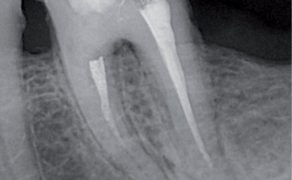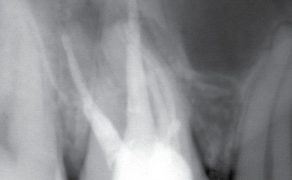

Czas niechirurgicznego leczenia endodontycznego z użyciem lub bez użycia lupy
Working while using a magnifying loupe has become an increasingly accepted practice in dentistry. Not only has it become an accepted practice for many dental specialties, but is considered mandatory in the endodontic programs at some dental schools [5, 6]. With the aid of a magnifying loupe, the visualisation of the surgical field is enhanced; as a result, the diagnostic capability is improved. The magnifying loupe often enables the dentist to confirm the presence of cracks, both in the natural crowns of teeth and in the roots of teeth restored with post crowns [7]. The identification of dentinal cracks was reported to be higher (45%) than the naked eye (39%) in the same study. A careful examination of the gingival margins under the loupe may identify external root resorption. The marginal fit of restorations and the presence of caries can also be checked.
The use of a loupe also increases the efficiency of operative procedures, especially with regard to endodontic and aesthetic dental treatment [1, 5, 8]. Most dentists have relied principally on their normal visual acuity (20/20 vision). The pulp chamber and even the canals themselves can be sclerosed in teeth with large caries. Even for a dentist who has a good knowledge of canal anatomy can find it difficult to locate the root canals in a calcified pulp chamber [1]. The use of a magnifying loupe may help the clinician to identify the root canal entrance and probable extra [...]

którzy są subskrybentami naszego portalu.
i ciesz się dostępem do bazy merytorycznej wiedzy!