Dystalizator Carriere Motion – opis przypadków
[wersja anglojęzyczna]
Distalization is an effective method to correct class II malocclusion and to achieve space for crowded anterior teeth. The common appliance used for distalization was Headgear. Numerous studies were conducted using Headgear, proving his effectiveness (1-4). Therapeutic effect depends on cooperation with patient. To liquidate inconveniences related to using Headgear, it was necessary to find another solution for distalization. The intraoral appliances are the alternative for Headgear. The force could be applied to buccal teeth surface, palatal surface or to both (5). Among appliances with conventional anchorage the most popular are: Pendulum, Distal Jet, Jones Jig (6).
Appliances for distalization based on conventional anchorage are more effective if they are based on the palat. Nance button is most often used to increase anchorage (5, 6). Side effects of using intraoral appliances is anchorage loss (5-8). Nowadays we can use appliances based on the miniimplants to avoid achorage loss. Carriere motion is intraoral appliance for distalization. Distalising force to move back upper posterior teeth is produced by elastics which are stretchted between lower first molar and distalizer on upper canine. The mobile joint, which is located on first molars, allows derotation of this teeth. The aim of this study is to present cases treated by intraoral appliance for distalization Carriere Motion.
Cases report
Patient no. 1
A 14-year-old patient came to the orthodontist for consultation.
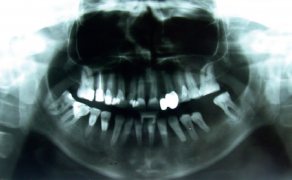
Diagnostics included a clinical interview and a physical examination, analysis of models, as well as a radiological examination: an orthopantomogram and a lateral head teleradiogram [...]

którzy są subskrybentami naszego portalu.
i ciesz się dostępem do bazy merytorycznej wiedzy!